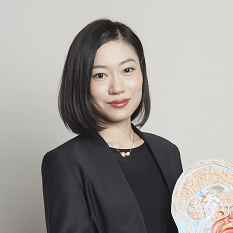
Ai Koizumi
Message
My research investigates how the brain and body interact with our surrounding environments to shape emotion, perception, behaviour, and mental well-being. I am particularly interested in how differences in anxiety, sensory processing, and neurodiversity can make the same environment supportive for one person but stressful or inaccessible for another.
I founded Mental-Barrier-Free Design Science to bring neuroscience into dialogue with architecture and environmental design. Combining fundamental neuroscience with physiological measurement, immersive environments, computational approaches, and real-world studies, our research seeks to understand how sensory and spatial features of environments influence the brain and body—and how these mechanisms can inform more inclusive environments.
Alongside this work, I investigate fundamental mechanisms of fear, anxiety, and memory and develop neuroscience-based approaches for alleviating maladaptive fear. Ultimately, my goal is to move beyond asking individuals to adapt to standardized environments, toward designing environments that better accommodate the diversity of human brains.
Profile
Ai KOIZUMI received her B.A. in Psychology and Cinema (double major) from The State University of New York (SUNY) Binghamton and her Ph.D. in Psychology from the University of Tokyo. She works as a researcher at Sony Computer Science Laboratories since 2019. Her research career includes time as a researcher in the Columbia University Department of Psychology and the Center for Information and Neural Networks (CiNet), and a special lecturer at the Keio University Graduate School of Media and Governance. She currently serves as a cooperating researcher with Advanced Telecommunications Research Institute International (ATR). Previously, she served as a special researcher or special international researcher with Precursory Research for Embryonic Science and Technology (PRESTO), the Japan Society for the Promotion of Science (JSPS), NTT Communications Science Laboratories, the Japan-U.S. Brain Research Cooperation Program, the Leading Initiative for Excellent Young Researchers (LEADER).